When algorithms and provocation enter the classroom – what is the controversial influencer phenomenon really about?
| Time to read:4 minutes
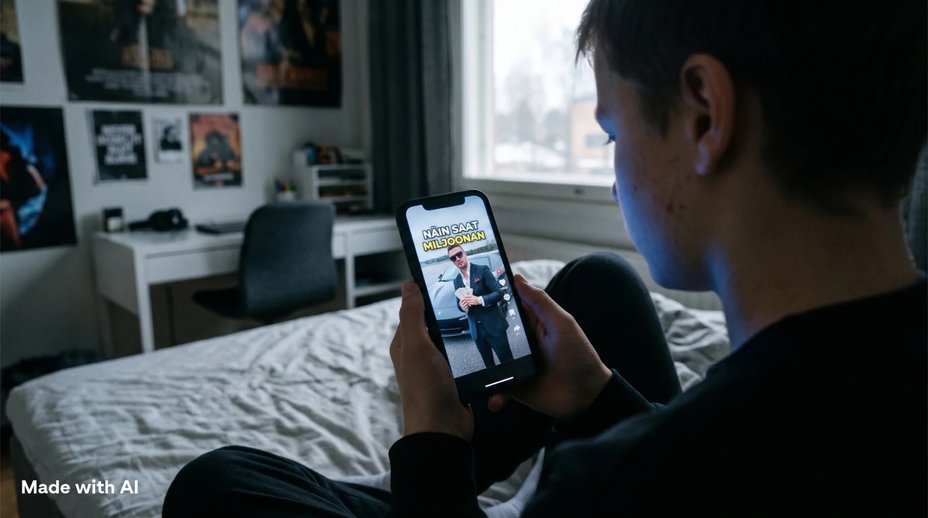
Lately, new catchphrases, memes, or overtly discriminatory remarks that confuse adults may have begun echoing through school hallways and students' speech. This is rarely a coincidence; rather, it is a phenomenon where social media algorithms, the attention economy, and the radicalization of young people intersect.
Fast-rising figures, especially on TikTok – ranging from domestic phenomena like Ossi Ketola and Stagala to international names like Andrew Tate – are raising concern in both homes and schools. What is this phenomenon really about, why does it resonate with youth, and how can adults set boundaries?
What is the phenomenon about?
Social media platforms, particularly TikTok, reward content that provokes intense reactions: outrage, astonishment, admiration, or polarization. Recommendation algorithms do not evaluate the ethics of content; instead, they measure factors like watch time and engagement. This is what we call the attention economy: social platforms compete to capture our time and focus.
People seeking to further their own agendas can exploit this mechanism in numerous ways. For instance, social media persona Ossi Ketola has gained notoriety by styling himself as a filthy-rich "controversial millionaire," sharing offensive or racist comments, and even offering money to people who make videos about him.
Ketola is behind a gambling company called Duel, and as Finland's gambling market undergoes reform, this attention serves as direct marketing for his business ventures. This is hardly accidental. The videos produced by controversial influencers may not even represent their creators' actual beliefs – they are simply tools of the attention economy.
Why does this content resonate with young people?
Research shows that social media platforms begin serving extreme content to young users within the first 20 minutes of downloading an app, even if the user has not searched for anything related to the topic. At the same time, we know that teenagers spend up to 4.5 hours a day on social media.
When young people are exposed to provocative content dozens of times a day, extremist ideas start to become normalized. Expensive cars, massive stacks of cash, and ostentatious success appeal to adolescents at an age when aspirations for the future and gaining independence are top of mind.
A controversial influencer can turn into an in-school meme or an instrument of peer pressure used to test adult boundaries or bolster one's own social standing. Youth frequently repeat catchphrases they have overheard without grasping their genuine meaning or historical baggage. Even if a young person does not personally subscribe to a racist or discriminatory worldview, repeating such phrases becomes "acceptable" within the group unless an adult clearly intervenes.
From memes to extremist thinking
Alongside the attention economy, another side of the phenomenon must be recognized: digital platforms are also actively leveraged by various extremist movements and radical networks aiming to recruit young people. Discriminatory speech cloaked in humor and memes normalizes hate and lowers the threshold for extremist ideologies. Even if an influencer's only goal is followers or financial gain, they inadvertently serve as a platform that lays the groundwork for the radicalization of youth.
How do we act together in schools and at home?
Addressing this phenomenon requires adults to establish firm boundaries.
At school:
- Uphold clear boundaries and zero tolerance. Racism and discrimination cannot be dismissed as jokes; every student has the right to a safe and equitable everyday school environment.
- Discuss language and ethics openly in groups: address the true meanings of words, legal boundaries, and how human dignity is protected in day-to-day life.
- Show students the mechanics behind online content and expose manipulation – young people rarely want to be pawns manipulated by click-driven businesses or extremist groups.
- Communicate observed harmful trends to guardians promptly and constructively.
At home:
- Talk about what appears on your child's feed and ask what they think about the content and personalities they encounter.
- Reflect together on who is behind the content, how they profit from the attention, and what their underlying motives might be.
- Make it clear that online memes and hurtful words impact real people, and joining in with the crowd does not absolve anyone of personal responsibility.
When adults recognize the traps of the attention economy and the tactics of online radicalization, we can help young people see past provocations and foster equality in daily school life through concrete actions.
Someturva's multidisciplinary team of experts helps school communities and families address challenging situations with a low barrier to entry. If your school uses Someturva and concerns arise regarding students' language, the sharing of social media content, or potentially illegal acts, you will receive clear, direct guidance from us to resolve the situation.
Writers
Someturva Emergency Unit specialists